
SteelSeries Arctis 7 Wireless Gaming Headset Review: Still a Comfort King With Rock-Solid Wireless Audio
Introduction
The SteelSeries Arctis 7 Wireless Gaming Headset has long been a favorite among PC and console gamers for its comfort-first design, dependable 2.4 GHz wireless connection, and clear microphone. While newer models have arrived, the Arctis 7 remains a compelling mid-range choice thanks to its balanced sound, excellent software, and thoughtful controls. This review dives deep into its features, performance, build quality, value, and how it stacks up against popular alternatives to help you decide if it’s the right headset for your setup.
Key Features and Specifications
At its core, the Arctis 7 aims to deliver lag-free wireless audio, a broadcast-style microphone, and all-day comfort without overcomplicating the experience. It succeeds by pairing proven 2.4 GHz wireless technology with SteelSeries’ signature “ski-goggle” suspension headband, breathable ear cushions, and intuitive on-ear controls.
- Wireless: Lossless 2.4 GHz via compact USB-A dongle (PC-first design)
- Range: Up to ~12 m / 40 ft (line of sight)
- Battery life: Up to 24 hours per charge
- Drivers: 40 mm neodymium
- Frequency response (headphones): 20 Hz – 20 kHz
- Impedance: 32 Ω (nominal)
- Microphone: Retractable ClearCast bidirectional, noise-canceling
- Mic frequency response: 100 Hz – 10 kHz
- Surround (PC): DTS Headphone:X v2.0 via SteelSeries software
- Controls: Volume wheel, ChatMix dial (PC), mic mute, power
- Charging: Micro‑USB
- Wired option: 3.5 mm analog (plus share port)
- Weight: Approx. mid-300 grams
- Compatibility: PC, Mac, PlayStation (PS4/PS5), Nintendo Switch (dock) via USB, mobile via 3.5 mm; not natively compatible with Xbox (see variants)
- Software: SteelSeries GG with Engine (EQ, surround, sidetone, presets)
The ChatMix dial is a standout for PC users, letting you blend game and voice chat volume on the fly. On PlayStation and other platforms, ChatMix support is limited by system constraints, but core audio and mic functions remain strong.
Performance and Quality
Wireless latency and stability: The Arctis 7’s 2.4 GHz connection is exactly what gamers want: low latency and robust stability. In practice, it feels instantaneous for competitive shooters, MOBAs, and fighting games alike. Whether you’re tracking footsteps in tactical shooters or timing parries in action titles, the headset preserves cues without noticeable lag. Interference is rare; the signal holds up reliably across a typical room and even through a wall or two in most homes.
Sound signature: SteelSeries tunes the Arctis line toward clarity and balance. The Arctis 7 continues that approach with a neutral-leaning profile and a tasteful low-end lift. Bass has satisfying punch without smothering mids; dialog and footsteps remain articulate, and upper treble offers detail without harshness. It’s a versatile sound that suits competitive play and single-player immersion, and it doubles reasonably well for music and streaming.
Positional audio and surround: On PC, enabling DTS Headphone:X v2.0 in SteelSeries GG delivers convincing spatial cues. Gunfire and ability effects are easier to localize, helping competitive awareness. That said, purists may prefer stereo for the most natural tonality; fortunately, the software makes switching easy. On PlayStation, you won’t get DTS from the headset app, but the console’s own 3D audio processing still provides a strong sense of space with compatible titles.
Microphone performance: The retractable ClearCast mic is a major strength. Its bidirectional, noise-canceling design focuses on your voice and minimizes background noise—useful for noisy rooms or mechanical keyboards. Your voice sounds full and intelligible for team comms and casual streaming. While studio mics or premium broadcast solutions will sound richer, the Arctis 7’s mic quality is easily above average for a wireless gaming headset in this price range.
Battery life and charging: Expect up to 24 hours of playback per charge at moderate volume. Real-world results typically hover in the high teens to low 20s depending on volume and sidetone use. The only dated note is micro‑USB charging. It’s reliable but less convenient than USB‑C, especially if most of your gear has moved on. Still, overnight top-ups or periodic daytime charges are straightforward, and the headset can be used while charging.
Software tuning and features: SteelSeries GG (with Engine) remains one of the better headset suites. You get a clean EQ with multiple bands, a range of presets for popular genres, customizable mic sidetone, and easy toggles for surround. The app also handles firmware updates and can store profiles per game. It’s unobtrusive and mature, which makes living with the Arctis 7 day to day refreshingly simple.
Everyday experience: Between stable wireless, comfortable wear, and well-placed controls, the Arctis 7 shines in daily use. The ChatMix wheel is a productivity boon for Discord or Zoom while gaming. The earcups swivel flat for neck breaks, and the lightweight frame fades away during longer sessions. If you prioritize focus without fiddling, this headset’s “get out of the way” approach is a big win.
Design and Build Quality
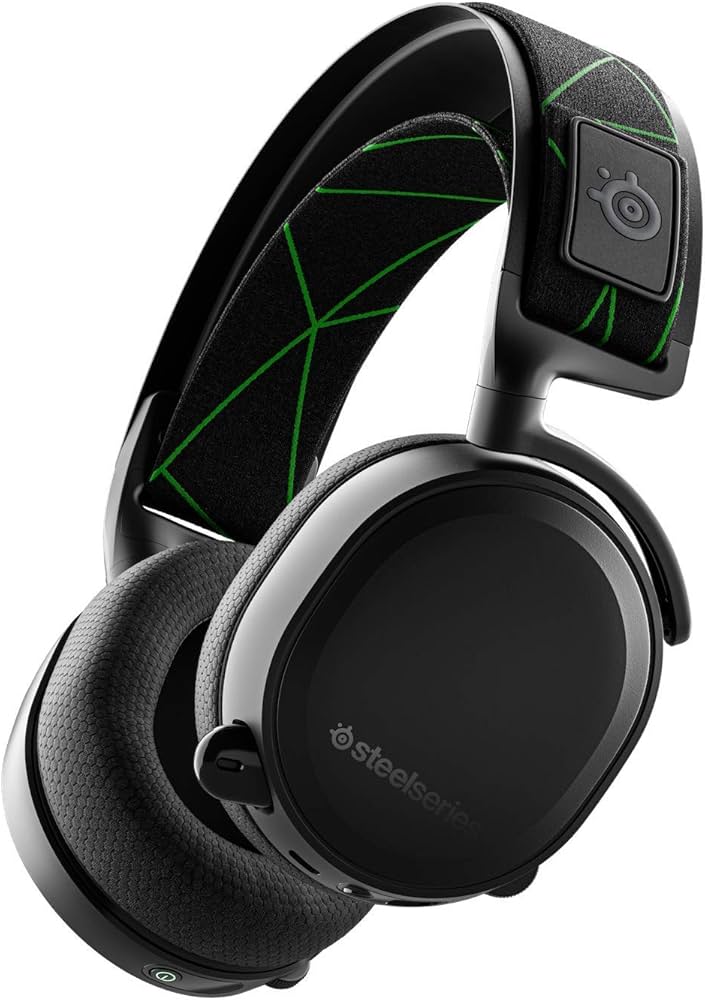
Comfort-first design: SteelSeries’ signature ski-goggle suspension headband distributes weight evenly across your head. Instead of a rigid clamp digging into your scalp, the elastic strap cradles your crown and self-adjusts. Paired with breathable AirWeave fabric cushions, the Arctis 7 stays comfortable over multi-hour sessions. The moderate clamp provides a stable seal without excessive pressure—a sweet spot for most head shapes.
Materials and durability: The headband uses a steel-reinforced frame for long-term durability, while the outer shells and yokes are a sturdy matte plastic that resists creaks and fingerprints. The retractable mic slides smoothly and snaps cleanly back into the earcup when not in use. The removable strap is replaceable, and third-party or SteelSeries-branded straps and earpads are easy to find, which extends the headset’s usable life.
Controls and ergonomics: Everything you need sits on the earcups: a volume wheel and ChatMix dial, a tactile mic mute button, and a power button with a clear LED indicator. The ports include micro‑USB for charging, a 3.5 mm analog input, and a share port to pass audio to a friend’s wired headphones. Earcups rotate 90 degrees to lay flat, making them comfortable to rest around your neck.
Fit nuances: The elastic strap tension is adjustable with Velcro, which helps fine-tune fit if you have a larger or smaller head. Glasses wearers should find the cushions forgiving, though very thick frames may create a minor gap. Heat buildup is minimal thanks to the fabric pads, though in very warm rooms you may still prefer an occasional breather.
Pros and Cons
Pros
- Stable, low‑latency 2.4 GHz wireless that feels wired-fast
- Balanced, detailed sound with good imaging and footstep clarity
- ClearCast retractable mic offers clean, noise-reduced voice capture
- Exceptional comfort from the ski-goggle headband and breathable cushions
- ChatMix dial on PC is great for blending game and voice chat
- Thoughtful ergonomics and on-ear controls; swivel-flat earcups
- Software is mature and useful without being bloated (EQ, surround, sidetone)
- Works across PC, Mac, PlayStation, and Switch (dock) via USB
- Analog 3.5 mm option and share port add flexibility
Cons
- Micro‑USB charging feels dated compared to USB‑C
- No Bluetooth for phones, tablets, or Switch handheld mode
- ChatMix and DTS surround are PC-only features
- Not natively compatible with Xbox (consider Arctis 7X or Nova 7X)
- Battery life is good but beaten by newer headsets with 30–70+ hour claims
- Sound is balanced, but bass-heads may want more low-end thump out of the box
- USB-A dongle is bulkier than some newer low-profile or USB‑C receivers
Value Proposition and Pricing
The Arctis 7 originally launched as a mid-range wireless flagship and often sits around the mid-$100s depending on retailer and region. Street pricing can fluctuate, but deals are common—if you spot it around the $100–$130 mark, it’s a particularly strong value. At higher prices, it competes with newer models that add USB‑C charging, Bluetooth multipoint, or longer battery life.
What you’re paying for here is proven reliability: near-zero wireless fuss, excellent comfort, and a mic that won’t embarrass you on comms. The sound profile is crowd-pleasing and flexible, and SteelSeries’ software support has been consistently good, which helps future-proof the experience.
If you need premium extras like simultaneous Bluetooth or hot-swappable batteries, you’ll want to look higher in the stack. But if your priority is a dependable wireless gaming headset that just works across PC and PlayStation with minimal tweaking, the Arctis 7 remains a smart buy—especially on sale.
Comparison With Alternatives
The wireless gaming market is crowded, so here’s how the Arctis 7 compares with a few popular rivals and successors.
- SteelSeries Arctis Nova 7 / 7P / 7X: The Nova 7 line effectively succeeds the Arctis 7. It upgrades to USB‑C charging, adds Bluetooth multipoint for phone/console/PC dual audio, and extends battery life. Sound is a touch more energetic, and the mic benefits from updated processing. If you want modern conveniences and platform variants (7P for PlayStation, 7X for Xbox), the Nova 7 is the better pick—usually at a higher price. The Arctis 7 still competes well on comfort and core 2.4 GHz performance.
- HyperX Cloud II Wireless: Known for punchy bass and plug-and-play simplicity, the Cloud II Wireless offers excellent battery life and comfort with a slightly bassier, warmer sound. Mic quality is solid but not as focused in noisy rooms as the Arctis 7’s ClearCast. If you favor cinematic boom and long endurance, the Cloud II Wireless is a strong alternative; for balanced mids and superior software, the Arctis 7 wins.
- Logitech G Pro X Wireless (Lightspeed): Logitech’s Lightspeed wireless is superb, and the headset brings Blue VO!CE mic processing on PC for broadcast-like vocal tuning. It’s heavier and typically pricier, with a more “studio-monitor” tilt to its sound. Competitive players and streamers may appreciate its tuning depth; comfort-wise, the Arctis 7’s suspension headband often feels lighter and cooler over long sessions.
- Razer BlackShark V2 Pro (2023): A modern favorite with long battery life and a strong detachable mic. The newest versions support both 2.4 GHz and, on some models, Bluetooth, plus robust software EQ. It leans toward an energetic V-shaped sound. If you want the latest wireless features and travel convenience, the BlackShark V2 Pro is compelling; for a more balanced sound and the comfort of a suspension band, the Arctis 7 is still appealing.
- Corsair HS80 RGB Wireless: Excellent mic quality and a comfortable floating headband design with USB‑C charging. Its sound is lively, and iCUE software is powerful—if a bit heavier on system resources. The HS80 can edge out the Arctis 7 on mic fidelity and modern I/O, but the Arctis 7 remains lighter-feeling with a slightly more neutral tuning.
In short, the Arctis 7 holds its ground against newer competition on comfort, stability, and tonal balance. If you don’t need Bluetooth or USB‑C, it’s still an easy recommendation—especially when discounted.
Who Should Buy the SteelSeries Arctis 7
The Arctis 7 is built for gamers who value comfort and consistent wireless performance over bleeding-edge features. Consider it if you match the following:
- PC and PlayStation players seeking reliable, low‑latency wireless with good software support
- Competitive gamers who want clean imaging, clear footstep cues, and instant ChatMix control on PC
- Long-session users who prioritize comfort, breathable pads, and a light-feeling fit
- Remote workers or students who need a dependable mic for calls and class alongside gaming
- Deal hunters who can grab it at a strong sale price and don’t mind micro‑USB
You may want to look elsewhere if you primarily game on Xbox (consider Arctis 7X or Nova 7X), require Bluetooth for phone calls or Switch handheld mode, or insist on USB‑C charging and multi-day battery life without recharging.
Conclusion
The SteelSeries Arctis 7 endures because it nails the basics: fast and stable 2.4 GHz wireless, a clear and reliable mic, and all-day comfort from a smart suspension design. Its balanced sound suits both competitive and cinematic games, while SteelSeries’ software remains a quiet strength. Micro‑USB and the lack of Bluetooth reveal its age, but at the right price, it’s still a terrific wireless headset for PC and PlayStation gamers who want a proven, fuss-free experience.