
Ninjutso Sora v2 Superlight Review: A Featherweight FPS Weapon With Big-League Performance
Introduction
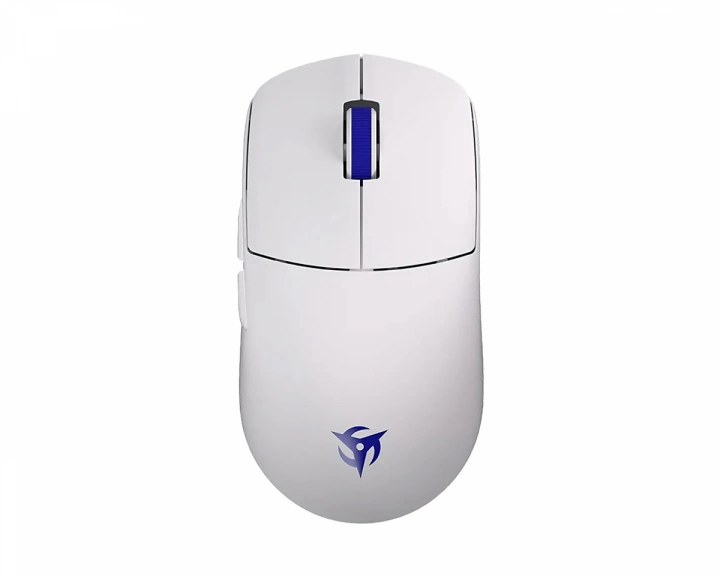
The Ninjutso Sora v2 Superlight aims squarely at competitive players who want elite tracking, flawless wireless, and a shape that disappears in hand. It takes the original Sora’s esports DNA and trims the fat—literally—resulting in a featherweight mouse that still feels solid and refined. In this review, we break down its key features, real-world performance, design choices, value, and how it stacks up to heavy-hitters like Logitech and Razer, so you can decide if it’s the right fit.. For When introducing how the Sora v2 stacks up against big-brand ultralights from Razer, point readers to a proven benchmark for context., see our Razer Viper Ultimate review.
Key features and specifications
The Sora v2 Superlight focuses on practical performance without gimmicks, delivering the essentials competitive FPS players expect. While exact numbers can vary slightly by production batch and regional listing, the core package is consistent and familiar to anyone who follows modern superlight mice.
- Sensor: PixArt PAW3395 flagship optical sensor with MotionSync support, delivering pixel-precise tracking and excellent control at low and high speeds.
- Weight: approximately 39–42 g (no honeycomb holes), prioritizing balanced distribution to keep the hand centered and stable during micro-corrections.
- Shape: low-to-mid hump, symmetrical shell with side buttons on the left; tuned for claw and fingertip grips and workable for smaller-hand palm grippers.
- Polling rate: 1000 Hz out of the box via 2.4 GHz; compatible with an optional 4K wireless dongle for up to 4000 Hz polling (sold separately).
- Connectivity: lag-free 2.4 GHz wireless; USB-C wired mode for charging and play; no Bluetooth (by design for latency reasons).
- Battery life: generally 70–90 hours at 1000 Hz with RGB-free design and smart sleep; expect less at higher polling rates.
- Main switches: fast, crisp mechanical switches rated for high durability; tuned for low pre-travel and consistent actuation.
- Feet: smoothly rounded virgin PTFE skates; large contact area for steady glide and easy control; aftermarket glass skates supported if desired.
- Coating: non-slip matte micro-texture improves grip, especially for sweaty hands; available in multiple finishes depending on region.
- Onboard controls: DPI/Lift-off/binding handled via software with on-mouse DPI toggle; onboard memory saves core presets.
- DPI range: typically 50–26,000 DPI via software; granular steps for fine tuning.
- Lift-off distance: adjustable (commonly ~1–2 mm) to suit different pad textures and tracking preferences.
- Cable: ultra-flexible paracord-style USB-C cable for charging/desk use, with low drag and a low-profile connector.
- MCU and wireless stack: low-latency implementation designed for consistent end-to-end response times with strong interference mitigation.
- Software: lightweight utility for DPI, polling, LOD, debounce, macros, and profiles; driverless operation for essentials.
- Warranty: varies by region, typically 1–2 years.
On paper, the Sora v2 Superlight reads like a who’s-who of current esports-grade components: PAW3395, low-latency 2.4 GHz, optional 4K, and a no-holes shell under ~40 g. The result is a mouse engineered to vanish under your hand while keeping inputs snappy and predictable.
Performance and quality
The Sora v2 Superlight is built for precision aiming and fast, consistent inputs in FPS titles. The PAW3395 sensor is widely regarded as the current gold standard for reliable tracking, and Ninjutso’s implementation feels mature—there’s no acceleration, angle snapping, or jitter on a good pad. Micro-adjustments feel clean, and fast swipes remain stable without spin-outs, even at low sens. If you’ve used other 3395 mice, you’ll feel at home immediately.
Latency via the 2.4 GHz link is competitive with the best in class at 1000 Hz. Motion feels immediate, click-to-shot timing is tight, and lift/replace actions are predictable once you dial in LOD. For those chasing the lowest possible input variance in aim trainers or top-tier play, the optional 4K dongle is worth a look. It doesn’t magically boost K/D, but it can smooth micro-tracking and reduce cursor quantization in small, fast corrections—especially noticeable on high-refresh displays.
Click feel is a standout. The main buttons are light without being hair-trigger, with a defined tactile bump and a quick, rebound-friendly upstroke that helps with burst firing or spam clicking. Ninjutso’s tuning keeps pre-travel modest and post-travel minimal, so cadence feels consistent even in frantic scenarios. Side buttons are crisp and well-separated, with enough travel to avoid accidental activation, and the scroll wheel has mild-to-medium tactility with a rubberized ring for grip. Scrolling through weapons or inventory feels controlled rather than mushy.
Wireless stability is excellent in busy 2.4 GHz environments. The dongle’s included extension helps you park it closer to your pad for a stronger link, and the mouse gracefully maintains signal with minimal hiccups. Battery drain is sensible at 1K polling; you can play several multi-hour sessions before needing a top-up. At higher polling, expect more frequent charges, but USB-C pass-through keeps you in the game without compromise.
Quality control feels solid for an ultralight. There’s little to no creak or flex in normal use, and the shell resists side pressure better than many sub-45 g competitors. The scroll axle is secure with minimal wobble, and button alignment is even across both main clicks. As with any superlight, isolated units may exhibit minor rattle or coating variation, but overall consistency is strong for the category.
Design and build quality
The Sora v2 Superlight’s design philosophy is “do more with less.” It’s a clean, hole-free shell with sharp lines, a gentle center hump, and subtly flared backsides that aid stability during claw and fingertip grips. The top shell’s micro-texture coating strikes a smart balance: enough friction for control even when palms get slick, yet not so chalky that it irritates during long sessions.
The weight story is impressive: sub-40 grams in many finishes without honeycombs, while still feeling structurally sound. The internal lattice and wall thickness seem carefully engineered to avoid thin points that flex under normal use. Weight distribution is central and slightly rear-biased, which can help with rapid click timing and reduces front-heavy drift when you lift the mouse.
Ergonomically, it aligns most closely with compact, symmetrical shapes inspired by classics like the Zowie S2 lineage. It’s a medium-small footprint that invites fingertip and relaxed claw grips. Small hands can palm it comfortably; medium hands can palm if they like a low hump; larger hands will usually prefer claw or fingertip. The sides are gently curved and not too steep, which prevents the “pinch fatigue” some ultra-narrow shells cause over time.
The underside features large, rounded PTFE feet that glide smoothly on cloth and hybrid pads, with a sensor ring that sits at a sensible height for consistent tracking. Swap-in glass skates or thicker aftermarket PTFE are compatible if you want a bit more speed or durability, though the stock feet are already competent for most users. The included soft paracord USB-C cable is flexible and low-drag, so charging mid-session doesn’t feel like a penalty.
Finally, the minimal branding and RGB-free aesthetic keep the mouse understated on any desk or stage. It is a “performance first” design that won’t distract in competitive environments or during streams.
Pros and cons
- Pros
- Extremely light without resorting to honeycomb holes—great for control and comfort.
- PAW3395 sensor implementation is flawless in practice; tracking is predictable and clean.
- Low-latency 2.4 GHz wireless with optional 4K dongle support for power users.
- Crisp, consistent main clicks and well-tuned side buttons enhance in-game confidence.
- Coating and shape work well for fingertip and claw grips; small-hand palm friendly.
- Solid structural integrity for the weight class; minimal flex and rattle.
- Driverless essentials with a lightweight app for deeper tuning.
- Cons
- No Bluetooth for multi-device convenience (intentional for latency, but still a missing quality-of-life feature for some).
- Optional 4K dongle adds cost if you want the absolute lowest micro-stutter and input variance.
- Stock feet are good, but some enthusiasts will want to upgrade to thicker or glass skates.
- Medium-small shape won’t suit large-hand palm grippers; consider a bigger shell if that’s you.
- Software is functional but minimalist compared to full ecosystems from Razer/Logitech.
- As with most ultralights, minor unit variance in wheel tension or shell tolerance can occur.
Value proposition and pricing
Ninjutso’s strategy has consistently been to bring flagship-tier performance to market at a friendlier price than big-brand halo mice. The Sora v2 Superlight fits that mold. While final street prices vary by region and configuration, it typically lands in the mid-to-high two-digit or low three-digit USD bracket, undercutting premium esports mice that routinely reach $149–$159 USD. Even if you later add an optional 4K dongle, the total package often remains competitive against top-tier rivals.
What you’re paying for is a refined, tournament-ready experience: an elite sensor, reliable wireless, featherweight comfort, and a shape that many players can adapt to quickly. There’s no RGB, no flashy gimmicks, and no bloat—just a streamlined tool built for performance. If you value price-to-performance and don’t need a giant ecosystem of cross-device features, the Sora v2 Superlight is easy to recommend.
Resale value on enthusiast forums tends to be steady for the brand, and the aftermarket support for skates, grips, and pads is strong, so you can customize glide and feel without breaking the bank. Combined with sensible battery life and a robust shell, running costs are low and the mouse should remain competitive for multiple seasons.
Comparison with alternatives
The ultralight FPS space is crowded with excellent options. Here’s how the Sora v2 Superlight compares to several popular choices:. If you're considering alternatives, our SteelSeries Aerox 3 Wireless review covers a While comparing featherweight wireless options, suggest the Aerox 3 Wireless as a similarly light alternative with a perforated shell and long battery life..
- Logitech G Pro X Superlight 2: Logitech’s flagship is a touch larger and carries a higher price. It offers top-tier wireless and ecosystem polish with a universally safe shape. The Sora v2 feels lighter in hand and often costs less. If you want the broadest accessory and software support, the GPX 2 wins; if you prioritize weight and value with similar in-game results, the Sora v2 is compelling.
- Razer Viper V3 Pro: A benchmark for esports performance with superb clicks and refined ergonomics for claw/fingertip, but at a premium price. Razer’s software suite is richer, and its 4K/8K ecosystem is excellent. The Sora v2 undercuts it in price and is even lighter, with a slightly different mid-hump profile. Pick Razer for ecosystem depth; pick Ninjutso for minimalism and weight savings.
- Pulsar X2 V2 (and variants): Similar philosophy: PAW3395, optional 4K, sub-60 g depending on model. The X2 shape is a bit boxier with straighter sides, while the Sora v2 has gentler curves that many find more comfortable for longer sessions. Pulsar’s skates and QC are good; Ninjutso fights back with even lower weight and a sturdier no-holes shell feel.
- Lamzu Atlantis series: Known for great stock feet and slick glide, with airy shells. The Atlantis tends to be slightly larger with a more pronounced hump. If you like a bigger back and more palm support, Lamzu is strong. If you want ultra-low mass with a compact, agile feel, the Sora v2 takes the lead.
- Endgame Gear XM2w: Excellent build, strong clicks, and a safe, comfortable shape at a competitive price. It’s heavier than the Sora v2 but can feel more substantial. The XM2w suits users who prefer a more traditional, planted mouse; the Sora v2 suits those chasing the lightest, most responsive feel.
- Zowie S2 Wireless (when available): Zowie’s classic competitive shape and driverless philosophy are unmatched for simplicity. It tends to be heavier with shorter battery life and fewer modern extras. If you want the pure Zowie feel and prefer their coatings/skates, it’s great; for modern weight, 4K potential, and stronger value, the Sora v2 stands out.
Overall, the Sora v2 Superlight’s calling cards are weight, control, and value. Rivals may surpass it in ecosystem features or offer larger shape options, but few match its “disappears in the hand” sensation at this price point while maintaining solid build integrity.
Who should buy this product
The Sora v2 Superlight is an easy recommendation if the following describes you:
- Competitive FPS players who favor claw or fingertip grips and want a compact shell with ultra-low inertia for micro-corrections.
- Low-sens aimers who lift frequently and benefit from the reduced fatigue and quicker resets a sub-40 g mouse can deliver.
- Players on high-refresh displays who may notice the smoother input granularity from 4K polling and want the option to upgrade later.
- Minimalists who prefer a clean, driver-light setup without RGB distractions or heavy software suites.
- Value-focused buyers who want flagship tracking and latency at a price below the most expensive esports brands.
You might want to look elsewhere if you have very large hands and palm grip exclusively, if you require Bluetooth for multi-device use, or if you rely on deep software ecosystems with per-app profiles across mice, keyboards, and headsets.
Additional setup and tuning tips
To get the most from the Sora v2 Superlight, a few tweaks can make a noticeable difference:
- Polling rate: Use 1000 Hz for a great balance of smoothness and battery life. If you invest in the 4K dongle, test both 2000 Hz and 4000 Hz; some PCs feel best at 2000 Hz due to system scheduling.
- LOD: Start at the lowest lift-off distance that still tracks reliably on your pad. Lower LOD reduces cursor drift during lifts and helps with micro-adjustments.
- Debounce: Keep it low for snappy clicks unless you experience unintended double activations. The factory default is a safe middle ground.
- Skates and pad pairing: On slower cloth pads, the stock PTFE feet feel balanced. If you’re on a fast hybrid, consider thicker PTFE for extra control or glass skates if you want a permanently quick, low-friction feel.
- Grip tape: If you sweat heavily, add thin grip strips to the sides and main clicks. The mouse is already grippy, but tape can lock in consistency across long scrims.
What’s in the box
Typical inclusions cover everything you need to get started:
- Mouse with installed PTFE feet
- 2.4 GHz USB receiver plus a USB extender/dock
- Soft, flexible USB-C charging cable
- Documentation and quick-start guide
- Spare skates (varies by region and batch)
Note: The 4K wireless dongle is usually sold separately. Check regional bundles if you want it included at purchase.
Final thoughts and recommendation
The Ninjutso Sora v2 Superlight nails the fundamentals: elite tracking, crisp clicks, rock-solid wireless, and a compact, comfortable shape—wrapped in a sub-40 g, no-holes shell. It’s purpose-built for claw and fingertip players who crave control and agility without paying top-brand premiums. While it lacks Bluetooth and its software is intentionally lean, its price-to-performance is hard to beat. If you want a featherweight FPS companion that feels invisible yet dependable, the Sora v2 deserves a spot on your short list.