
Logitech G Pro X Wireless Gaming Headset Review: LIGHTSPEED Performance, Blue VO!CE Mic, and DTS 7.1 for Esports Precision
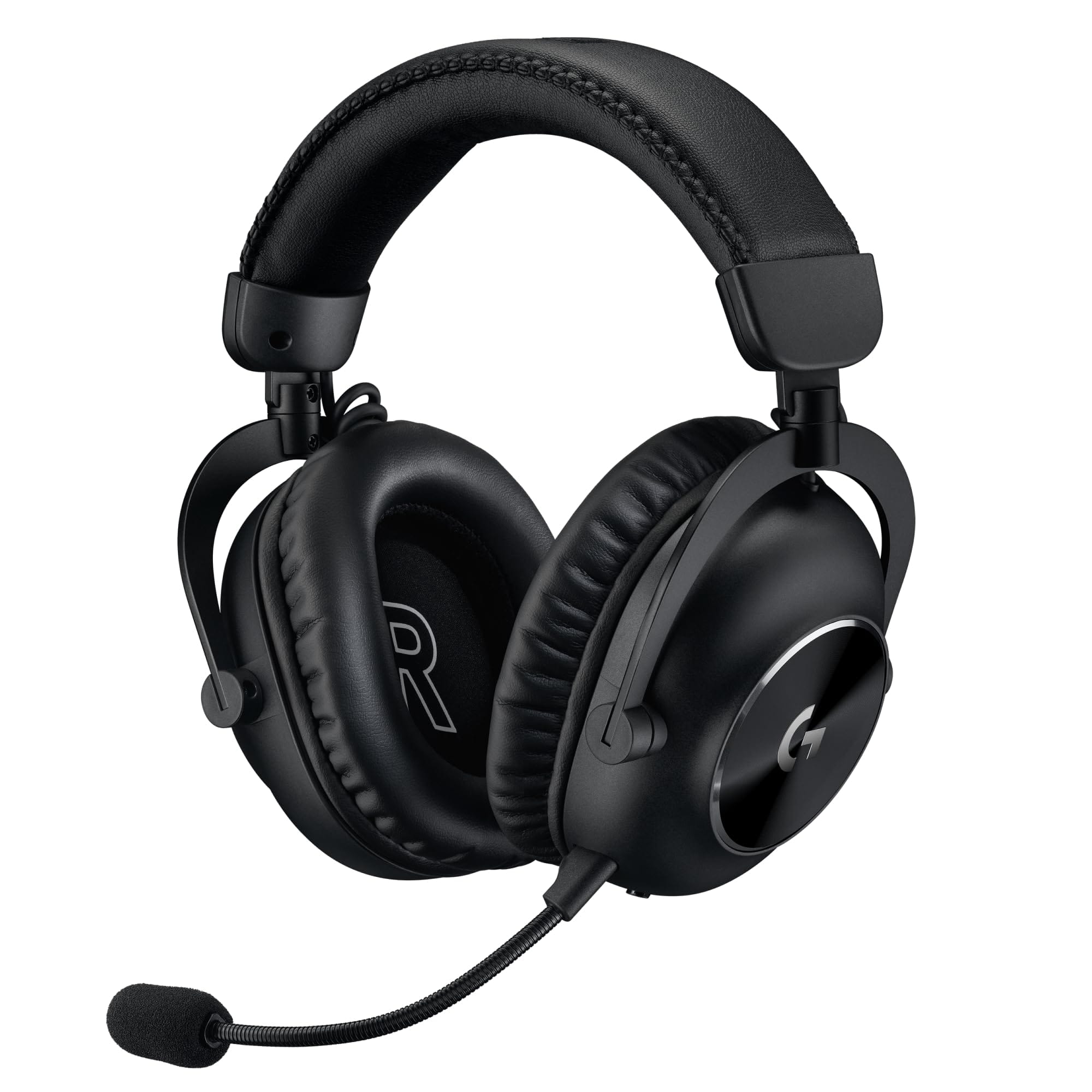
Logitech G Pro X Wireless Gaming Headset Review
Introduction
The Logitech G Pro X Wireless is built for competitive gamers who prioritize speed, clarity, and consistency. Combining Logitech’s low-latency LIGHTSPEED wireless with the acclaimed Blue VO!CE microphone processing and DTS Headphone:X 2.0 surround on PC, it aims to deliver a tournament-ready experience without the tether. With premium materials, replaceable ear pads, and comprehensive software control in G HUB, this headset promises all-day comfort and performance for serious play—while still holding its own for music and everyday use.
Key Features and Specifications
Logitech designed the G Pro X Wireless as a no-nonsense, performance-first headset. It strips away distractions like RGB and Bluetooth to focus on reliable 2.4 GHz wireless, detailed positional audio, and broadcast-style voice clarity. The result is a streamlined package that feels purpose-built for competitive environments—scrims, ranked grinds, and LAN events—while still being accessible to casual gamers who want robust sound and a dependable mic.
- Wireless tech: Logitech LIGHTSPEED 2.4 GHz with a compact USB receiver; stable link with low, consistent latency and an advertised range up to ~15 m (49 ft).
- Drivers: 50 mm PRO-G dynamic drivers tuned for gaming clarity and detail.
- Surround: DTS Headphone:X 2.0 (PC via G HUB) for virtual 7.1 positional audio with per-game profiles.
- Microphone: Detachable 6 mm cardioid boom mic; Blue VO!CE filters and effects (PC via G HUB) for broadcast-style processing. Typical mic response 100 Hz–10 kHz.
- Battery life: Up to ~20 hours per charge (usage and volume dependent); USB-C charging.
- Build: Steel-reinforced headband with aluminum forks; sturdy plastic earcups; replaceable pads.
- Ear pads: Two sets included—leatherette for isolation and velour for breathability—both memory-foam cushioned.
- Comfort/weight: Around 370 g; suspended headband padding and plush pads help distribute weight for longer sessions.
- On-headset controls: Volume wheel, mic-mute toggle, power switch; detachable mic for off-mic listening.
- Software: Logitech G HUB for EQ, surround tuning, mic presets (Blue VO!CE), and profile management.
- Connectivity: USB-A wireless receiver; USB-C charging cable included.
- Compatibility: Full feature set on Windows PC; basic stereo and mic on PlayStation consoles; works with Nintendo Switch in docked mode (stereo). DTS and Blue VO!CE require G HUB on PC. Not designed for Xbox systems. Mac support varies by feature.
- Accessories: Carry pouch, extra ear pads, USB receiver, charging cable.
In short, the spec sheet reads like a checklist for serious competitive play: fast wireless, tuned drivers, strong mic tools, and materials that can handle daily use. The inclusion of both leatherette and velour pads is a practical bonus that many headsets skip at this price.
Performance and Audio Quality
Wireless stability and latency: LIGHTSPEED remains one of the most reliable 2.4 GHz implementations. In real use, the G Pro X Wireless presents a low, consistent delay that feels “corded.” Movements, reloads, and gunfire trigger sounds exactly when you expect, even in busy 2.4 GHz environments. If you play on a desktop that’s under a desk, a simple USB extension or front-panel port can help maintain line-of-sight to the receiver and avoid signal shadowing, though the headset is generally forgiving about placement.
Sound signature and imaging: Out of the box, the tuning leans slightly V-shaped with energetic bass, clear upper mids, and crisp—but not piercing—treble. Explosions carry weight without blurring footstep cues, while dialogue remains intelligible in team chat and cutscenes. The 50 mm PRO-G drivers have tight control, and imaging is a strong point: in FPS titles like Valorant, Rainbow Six, or Counter-Strike, directional cues feel precise, and you can track vertical movement with confidence. The perceived soundstage is medium-wide; not cavernous, but large enough to make separation and positioning intuitive.
DTS Headphone:X 2.0 on PC: DTS processing adds positional data that can sharpen the sense of distance and angle, especially on well-mixed titles. It’s most useful when paired with a modest EQ tweak to tame low-end bloom and lift footstep-relevant frequencies. Logitech’s G HUB includes esports-oriented presets that emphasize footstep recognition and weapon transients; they’re a strong starting point, and the five-band EQ is simple enough for quick adjustments. Note that DTS is PC-only; on PlayStation or Switch you’ll use standard stereo, which still sounds lively.
Mic quality and Blue VO!CE: The detachable boom mic is competitive among wireless headsets, and Blue VO!CE is the secret weapon. With the processing enabled in G HUB, you can add a tasteful high-pass filter, noise reduction, compression, and de-essing to deliver a steady, broadcast-style tone that cuts through chaotic comms without sounding robotic. The difference between raw and processed output is noticeable: raw mic is decent; Blue VO!CE elevates clarity and consistency. On console, where Blue VO!CE isn’t available, the mic is still clear, though you may pick up more room noise and keyboard thumps without software gating.
Music and movie listening: The G Pro X Wireless isn’t a studio reference can, but it’s enjoyable. Bass lines have punch and body, vocals sit forward enough to stay prominent, and treble detail reveals cymbal texture and ambience without harshness. For movies and streaming, dialogue intelligibility is strong, and effects-heavy scenes maintain separation even at higher volumes. If you prefer a flatter, more neutral response for music, a small EQ cut around mid-bass and a slight lift in the presence region yields a more balanced tuning.
Battery life and charging behavior: Logitech rates the headset at up to about 20 hours. Real-world results vary by volume, surround usage, and mic activity; expect roughly a long day of play before you need to top up. The headset charges over USB-C, and you can keep gaming while charging, which alleviates range anxiety during tournaments or marathon sessions. Many competing models now push 40–70 hours or more, so while 20 hours was once competitive, it’s no longer class-leading—but it remains adequate for most schedules.
Software reliability: G HUB has matured. Profile switching is snappier, DTS settings apply consistently, and Blue VO!CE offers both pre-made profiles and deeper manual controls if you like to tinker. Exporting and importing profiles is straightforward, useful for team environments where you want identical sound on multiple machines.
Design, Comfort, and Build Quality
Materials and durability: The headset mixes a steel-reinforced headband with aluminum forks and dense plastics for the cups, striking a smart balance between rigidity and weight. There’s minimal creaking when you flex the chassis, and the yokes feel secure during frequent adjustment. The aesthetic is understated—no gamer RGB—so it doesn’t look out of place on camera or in an office.
Comfort and fit: At around 370 grams, the G Pro X Wireless isn’t the lightest, but the memory-foam pads and thick headband cushion distribute weight evenly. Clamp force is moderate, which helps stability during quick head movements without creating hotspots. Glasses wearers should find the velour pads especially comfortable; they conform around frames better than leatherette and enhance breathability. Leatherette, on the other hand, isolates a bit better and gives bass a touch more presence by improving the seal. Swapping pads takes only a minute and meaningfully changes the feel and sound.
Controls and I/O: The right cup houses a tactile volume wheel and a positive mic-mute toggle, both easy to find by feel. A USB-C port handles charging, and the microphone plugs in firmly with a 3.5 mm-style connector at the left cup. There’s no analog 3.5 mm audio input and no Bluetooth; this is a dedicated 2.4 GHz wireless headset. The included USB receiver is compact enough to leave in a laptop, and a short USB extension is handy if your desktop’s rear ports are recessed.
Portability and accessories: A soft carry pouch is included for dust protection and transport. Detaching the mic makes the headset slimmer in a backpack, and because the look is clean and minimal, using it in public spaces doesn’t draw attention. The extra set of pads meaningfully extends the headset’s lifespan—when the first pair wears out, swap to the spares and you’re back to a like-new seal and comfort.
Noise isolation: Passive isolation is good with leatherette pads and fair with velour. It’s enough to dampen a mechanical keyboard and household noise, though you’ll still hear loud fans or traffic. There’s no active noise cancellation, which is expected for a competitive-first gaming headset and avoids added latency or artifacts.
Pros and Cons
Every headset involves trade-offs. The G Pro X Wireless focuses on core gaming performance and build quality, not on multi-device convenience. Here’s how the balance shakes out in practice:
- Pros
- LIGHTSPEED wireless delivers low, consistent latency and a robust connection.
- Clear, competitive tuning with strong imaging; DTS adds useful positional cues on PC.
- Blue VO!CE processing dramatically improves mic clarity and consistency on PC.
- Premium materials (steel/aluminum) and replaceable pads for longevity.
- Two pad options included—leatherette for isolation, velour for breathability.
- Comfortable for multi-hour sessions; well-judged clamp and cushioning.
- Clean, professional look without flashy RGB; great for streaming or office use.
- USB-C charging and the ability to play while charging.
- Cons
- Battery life (around 20 hours) is now average versus newer competitors.
- No Bluetooth or analog 3.5 mm input; strictly a 2.4 GHz USB-dongle headset.
- DTS and Blue VO!CE are PC-only; console experience is limited to stereo without processing.
- Heavier than some modern alternatives; may fatigue smaller heads over very long sessions.
- Price can be high at full MSRP compared with feature-rich rivals.
- Ear cups have limited swivel compared to some designs, which may affect fit angle for a few users.
Value Proposition and Pricing
At launch, the Logitech G Pro X Wireless debuted around the $199 USD mark, and it often hovers near that price, though periodic sales bring it into the $129–$179 range. At full MSRP, it competes with headsets that offer longer battery life or multi-device connectivity. On sale, however, its value proposition sharpens considerably: it’s a focused, tournament-ready tool that excels in audio clarity, mic quality (with Blue VO!CE), and build.
Think of the G Pro X Wireless as an investment in consistency. If your priorities are reliable wireless performance, a clear competitive sound, and a microphone that won’t hold back your comms, it earns its price. You’re also getting tangible longevity perks: a strong chassis, replaceable pads, a detachable mic, and ongoing G HUB updates. Logitech’s typical limited hardware warranty (region-dependent; often two years) adds reasonable peace of mind.
Where it looks less compelling is for players who frequently swap between devices or who need marathon battery life for travel. The lack of Bluetooth is a deliberate design choice in favor of minimizing latency and complexity, but it means you’ll rely on the USB receiver and won’t easily pair with phones, tablets, or handhelds while on the go. If you spend most of your time on a single PC or PS5, though, those compromises matter less.
Bottom line on value: if you can catch it around $150, it’s one of the strongest picks in its lane. At $199, it’s still a high-quality, purpose-driven headset—just know what you’re paying for: low-latency reliability, great mic tools on PC, and a durable, comfortable build rather than connectivity extras.
Alternatives and Who Should Buy It
Alternatives to consider:
- Logitech G Pro X 2 LIGHTSPEED: The successor costs more but adds longer battery life, updated drivers, and multi-point connectivity options on some versions. If you want a more modern spec sheet and don’t mind paying a premium, it’s the natural upgrade within Logitech’s lineup.
- Razer BlackShark V2 Pro (latest revision): Known for comfort and long battery life, with a competitive tuning and a strong mic. Some revisions add Bluetooth alongside 2.4 GHz, giving it better multi-device flexibility. If you value lighter weight and endurance, it’s a top rival.
- HyperX Cloud Alpha Wireless: Staggering battery life (rated in the hundreds of hours) and a crowd-pleasing sound signature. It lacks the deep mic processing of Blue VO!CE and doesn’t offer Bluetooth, but for single-device users who hate charging, it’s hard to beat.
- SteelSeries Arctis Nova 7/7X: Dual wireless (2.4 GHz + Bluetooth) with simultaneous connectivity makes it excellent for PC, console, and mobile hopping. Comfort is among the best, and the mic is clear. Sound is versatile but may require EQ to match the G Pro X’s competitive edge.
- Corsair HS80 RGB Wireless: Often priced lower, with a strong broadcast-like mic and comfortable suspension headband. PC users can tap into spatial audio solutions (e.g., Dolby Atmos) and robust iCUE software, though battery life and weight aren’t class-leading.
Who should buy the Logitech G Pro X Wireless:
- Esports-focused PC players who want low-latency, predictable wireless performance, detailed imaging, and mic clarity that keeps callouts crisp.
- Streamers and team leaders who benefit from Blue VO!CE’s processing to maintain a consistent, intelligible voice without a separate XLR mic.
- PS5/PS4 players who primarily play at a desk or couch within receiver range and prefer a clean, no-RGB aesthetic with a detachable boom mic.
- Gamers who prize build quality—steel and aluminum components, replaceable pads, and a mature software stack—over feature sprawl.
Who should consider other options:
- Multi-device users who jump between PC, laptop, phone, and handhelds and want Bluetooth or dual-wireless capability.
- Battery-life maximalists who prefer 40–70+ hour headsets for infrequent charging or travel.
- Xbox players who need native wireless support or USB compatibility specific to that ecosystem.
- Ultralight headset fans who are sensitive to weight and want something under ~300 grams.
Ultimately, the G Pro X Wireless is an excellent fit if you live in ranked lobbies and value a dependable link, clean comms, and straightforward comfort. It’s less ideal if your day involves constant device switching or if you treat your headset as a do-it-all travel companion.
Conclusion
The Logitech G Pro X Wireless nails the fundamentals: low-latency wireless, detailed positional audio, and a standout mic with Blue VO!CE on PC. Its premium materials, included extra pads, and mature software elevate long-term value, while DTS adds useful spatial cues for competitive play. The trade-offs—average battery life and no Bluetooth—are deliberate. If your priority is reliable, tournament-ready performance on PC or PlayStation, this headset remains a smart, confidence-inspiring buy.